Which swimming strokes can be harmful to the body?
Swimming is often hailed as the "perfect" low-impact exercise, offering cardiovascular benefits while being gentle on the joints. However, like any repetitive physical activity, swimming is not entirely risk-free. Improper technique, overtraining, or pre-existing conditions can turn a healthy workout into a source of chronic pain.
Understanding which strokes pose specific risks and how to perform them correctly is essential for long-term physical health. Here is a breakdown of how different swimming strokes can potentially harm the body.
1. Breaststroke: The "Knee and Neck" Challenge
The breaststroke is popular for its rhythmic nature and ease of breathing, but it is statistically the stroke most likely to cause lower-body and cervical issues.
Breaststroke Swimmer’s Knee:
●The unique "whip kick" places immense lateral stress on the medial collateral ligament (MCL). Repeatedly snapping the legs together with force can lead to inflammation and ligament strain.
Neck and Back Strain:
●Many recreational swimmers keep their heads above water throughout the entire stroke. This puts the cervical spine in a constant state of hyperextension, leading to neck pain and upper back stiffness.
Lower Back Stress:
●The arching motion required to lift the chest out of the water can aggravate the lumbar spine, especially if the core is not properly engaged.
2. Butterfly: The High-Intensity Risk
Widely considered the most physically demanding stroke, the butterfly requires incredible core strength and shoulder mobility.
Lower Back Injuries:
●The "dolphin kick" involves a powerful undulating motion. If the movement originates too much from the lower back rather than the hips and core, it can lead to spondylolysis (stress fractures) or disc issues.
Shoulder Impingement:
●The simultaneous recovery of both arms over the water requires a high degree of shoulder rotation. Without perfect form, this can pinch the rotator cuff tendons against the bone.
3. Freestyle (Front Crawl): The "Swimmer’s Shoulder"
As the fastest and most common stroke, the freestyle is the leading cause of "Swimmer's Shoulder"—a catch-all term for shoulder impingement syndrome and rotator cuff tendonitis.
Shoulder Overuse:
●The repetitive overhead reaching and pulling can wear down the tendons. This is often exacerbated by "crossing the midline" during the entry phase, which creates unnecessary torque on the shoulder joint.
Neck Imbalance:
●Breathing only on one side can cause muscular imbalances in the neck and shoulders, leading to localized tightness and reduced range of motion.
4. Backstroke: The Shoulder and Spine Trap
While the backstroke is often recommended for those with back pain (as it keeps the spine neutral), it still carries risks.
Shoulder Strain:
●Similar to freestyle, the overhead rotation can lead to impingement if the hand enters the water at the wrong angle.
Hyperextension:
●Swimmers who over-rotate their torso or push too hard during the start and turns can experience strain in the small joints of the spine (facet joints).

How to scientifically avoid sports injuries?
As a professional brand specializing in swimming pools and hot tubs, we recommend taking the following preventive measures while enjoying the fun of swimming:
1. Adequate warm-up: Before swimming, focus on activating the shoulder joints, knee joints and ankle joints, and engaging the core muscles.
2. Standardize movements: Seek professional coaching to correct your posture. It's better to swim slowly than to compromise the comfort of your body structure.
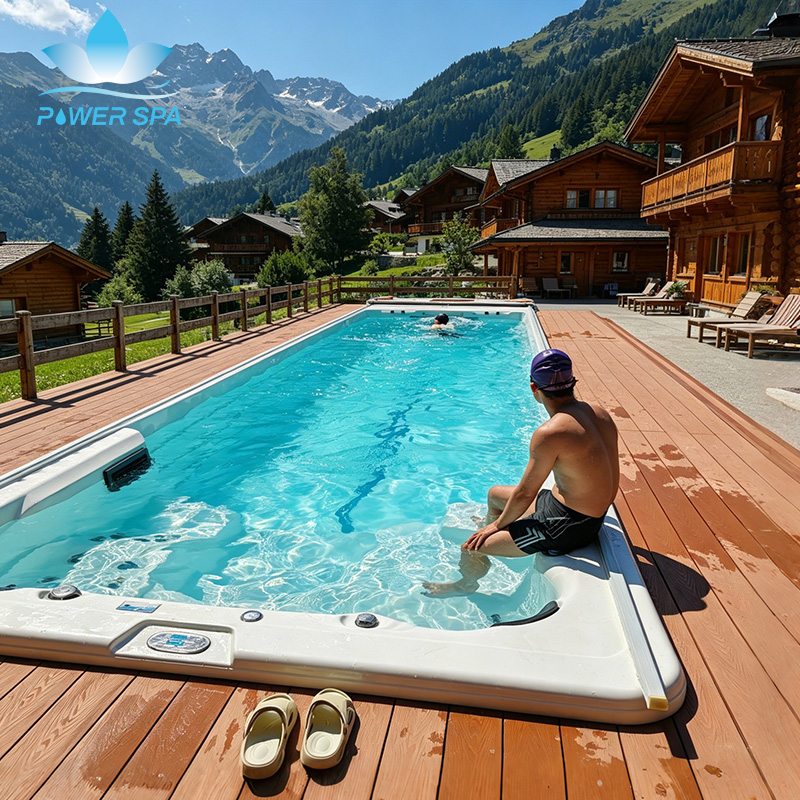
3. Appropriately utilize professional equipment: For those in the recovery period or the elderly, it is recommended to use Swim Spa . Its stable laminar flow technology allows users to perform low-impact exercises at a stable pace without turning over or making intense explosive movements, significantly reducing the risk of joint injuries caused by turning around the pool wall or exerting excessive force.
4. Rehabilitation and relaxation: After exercising, undergo appropriate heat therapy. Using a Hot Tub or Sauna to relax the muscles can effectively promote the elimination of lactic acid and repair minor muscle tears.