Key points to consider when installing a hot tub
A comprehensive professional guide from foundation to electrical system
Before enjoying the 40°C constant temperature hot water massage, a perfect installation is the prerequisite for all comfortable experiences. A hot tub is not just simple furniture; it is a sophisticated water circulation system integrated with heating, filtration, and massage functions.
The following are several essential key points that must be adhered to when installing a hot tub (especially for outdoor or semi-outdoor SPA):
1. A solid and flat foundation must absolutely prevent a "soft landing".
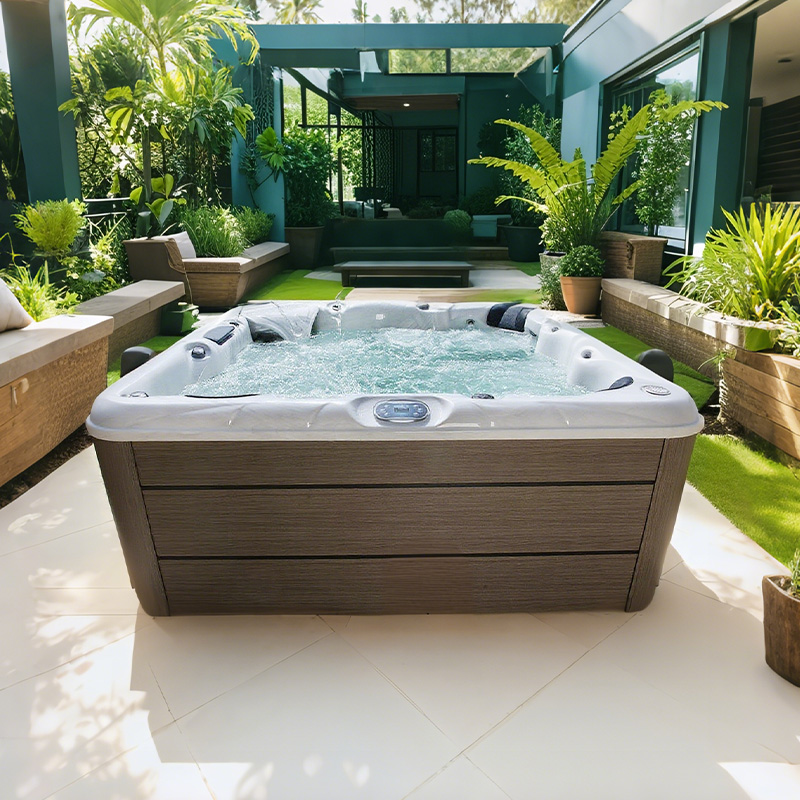
A 4-6 person capacity hot tub filled with water can weigh between 1.5 tons and 2.5 tons. Ground requirements: It must be placed on a flat and solid horizontal surface. Do not place it directly on grass or muddy ground. Long-term pressure will cause the foundation to sink, resulting in cracking of the bathtub base or leakage of the pipes. If installed on an anti-corrosion wood terrace, the structural engineer must calculate the load-bearing capacity per square meter of that location.
2. Professional power supply and safety protection
Hot tubs usually come with heaters of 3KW or more and multiple high-power motors, requiring extremely high circuit requirements. A dedicated line must be drawn from the distribution box, and it must not be shared with other high-power electrical appliances. Leakage protection is the lifeline. A matching current leakage protection switch must be installed, and ensure that the line is fully grounded.
3. "Pre-visit of the entrance route"
This is the aspect that is most easily overlooked. Hot tubs are usually delivered as a complete unit and cannot be disassembled. Dimension confirmation requires not only measuring the tub, but also the door, side yard passage, eave height, and even the need to remove temporary barriers. If installed on the top floor or in the deep part of the courtyard, it may be necessary to make an advance reservation for a crane. Ensure that the lifting points avoid high-voltage power lines.
4. Leave “maintenance space” on all four sides
The interior of the hot tub is filled with pipes, pumps, ozone generators and heaters. At least 50-80cm of operation space should be reserved on all four sides of the tub (especially on the side where the control panel is located). Avoid "total enclosure": If you plan to do an embedded design, you must design a detachable skirt or maintenance passage. Otherwise, if you need to replace the sealing ring or maintain the circuit, you may have to damage the entire expensive stone base.
5. Convenience of Drainage and Water Supply
Although a hot tub doesn't require draining water after each use like a regular bathtub, it needs to be completely emptied and refilled every 3-4 months. Make sure there is a water source nearby for connecting the water supply pipe. The bottom of the bathtub is equipped with a drain valve, and the installation location should be close to the drain or the drainage channel. Be careful not to directly discharge the water containing chemical agents into expensive plants.
6. Environmental Ventilation and Humidity Control (for indoor/veranda)
When the hot tub is in use with the cover removed, it will generate a large amount of hot air and steam. If it is installed indoors, in a veranda, or in a space capsule room, a high-power exhaust fan or an industrial-grade dehumidifier must be equipped. The walls and ceiling must use corrosion-resistant and moisture-proof materials to prevent water dripping from the ceiling or mold on the wall plaster.
7. Insulation Cover and Safety Protection
70% of the heat in a hot tub is lost through the water surface. When purchasing, make sure to check if there is an insulation cover. High-quality insulation covers not only save energy but also prevent dust from entering.
For more information about the hot tubs, please contact our professional consultation team.