Do hot tubs reduce cortisol?
Science Explained: How Hot Tubs Relieve Stress by Reducing Cortisol
In the fast-paced year of 2026, stress has become the “silent killer” of modern life. And when we talk about stress, we’re actually talking about a key hormone: cortisol. Chronically high levels of cortisol can lead to anxiety, insomnia, a weakened immune system, and even weight gain.
So, can a hot tub really lower cortisol levels? The answer is yes. This article will reveal the endocrinological principles behind hot tubs.

1. What is cortisol? Why does it need to be “suppressed”?
Cortisol is commonly referred to as the “fight-or-flight” hormone. When we feel stressed or anxious, the adrenal glands release large amounts of cortisol.
Short-term effect: It helps us cope with emergencies.
Long-term harm: If cortisol levels remain consistently high, it can disrupt sleep cycles, lead to high blood pressure, and cause the body to store fat around the abdomen.
2. The Three Scientific Mechanisms by Which Hot Baths Lower Cortisol
① “Resetting” the Parasympathetic Nervous System
When you step into water at 38°C–40°C, your body immediately senses the change in environment. This mild thermal stress rapidly reduces sympathetic nervous system activity, thereby activating the parasympathetic nervous system (which governs rest and digestion). Studies show that just 15–20 minutes of soaking can lower cortisol levels in the body by 20% to 30%.
② The “Weight-Loss” Effect of Buoyancy
Water provides powerful buoyancy that offsets approximately 90% of body weight. This “sense of floating” instantly relieves physical pressure on joints and muscles. When the brain receives signals that the body’s muscles are fully relaxed, it automatically reduces cortisol production and instead releases serotonin, which promotes a sense of well-being.
③ Improved Circulation and Endorphin Release
Hot water dilates blood vessels and accelerates blood flow. As microcirculation improves, the body secretes endorphins—natural painkillers and mood enhancers. Endorphins and cortisol have an inverse relationship in the body: the more endorphins there are, the less of the stress hormone is present.
3. Why Do High-Quality Systems Work Better?
Not all baths provide the same stress-relieving effects. Effective cortisol management requires precise technological support:
Intelligent Temperature Control: Reducing cortisol levels requires stable heat. The Balboa system ensures water temperature deviations are kept within 0.5°C, preventing secondary stress caused by sudden fluctuations in water temperature.
Precise acupressure massage: Massage jets targeting the back, neck, and soles of the feet mimic the techniques of a professional massage therapist. This deep tactile feedback further blocks the stress signals the brain sends to the adrenal glands.
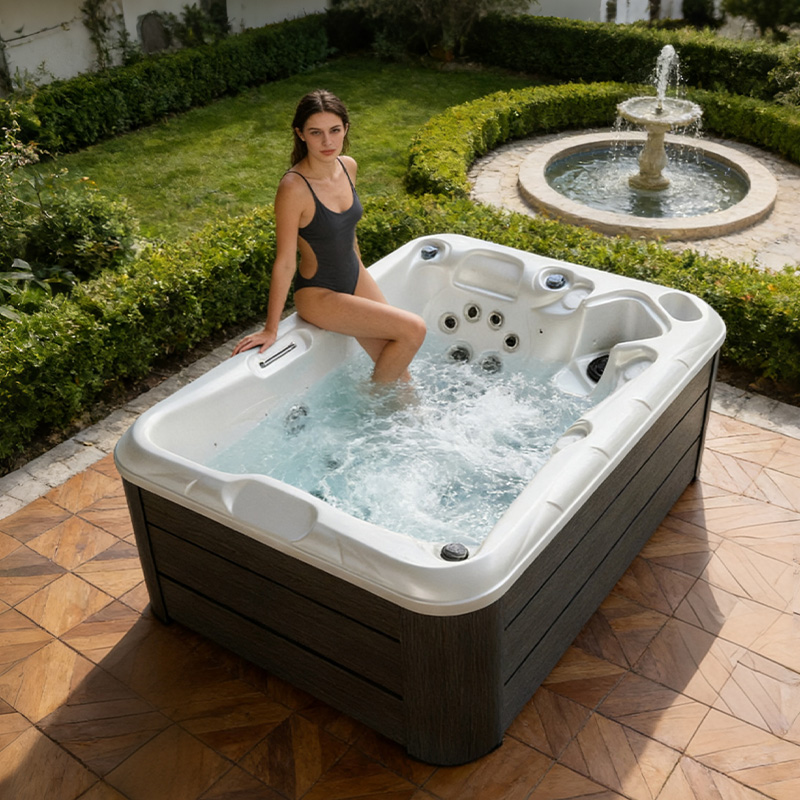
Scenic marketing: Placing a hot tub amidst natural outdoor scenery provides dual sensory relaxation through sight and touch, creating a synergistic cortisol-suppressing effect.
4. Recommendations for the Best Stress-Relief Routine
To achieve optimal stress management, we recommend the following:
Frequency: 3–4 times per week.
Duration: 15–20 minutes per session (do not exceed 30 minutes).
Timing: 1–2 hours before bedtime. As cortisol levels drop and core body temperature subsequently decreases gradually, this can trigger deep sleep.
Conclusion
A hot tub is not just a symbol of luxury; it’s also an effective system for regulating the body’s endocrine system. If you’re looking for a natural, side-effect-free way to combat the stress of modern life and lower cortisol levels, a 20-minute daily soak might be your best option.